The first-time buyer mortgage journey in Edmonton follows a clear order: save using the right accounts, get pre-approved with a rate hold, shop within the number you actually qualified for, then move through final approval, your lawyer, and funding on possession day. Two programs do most of the heavy lifting at the saving stage – the First Home Savings Account and the RRSP Home Buyers’ Plan. Work the steps in order, and each one makes the next one easier.
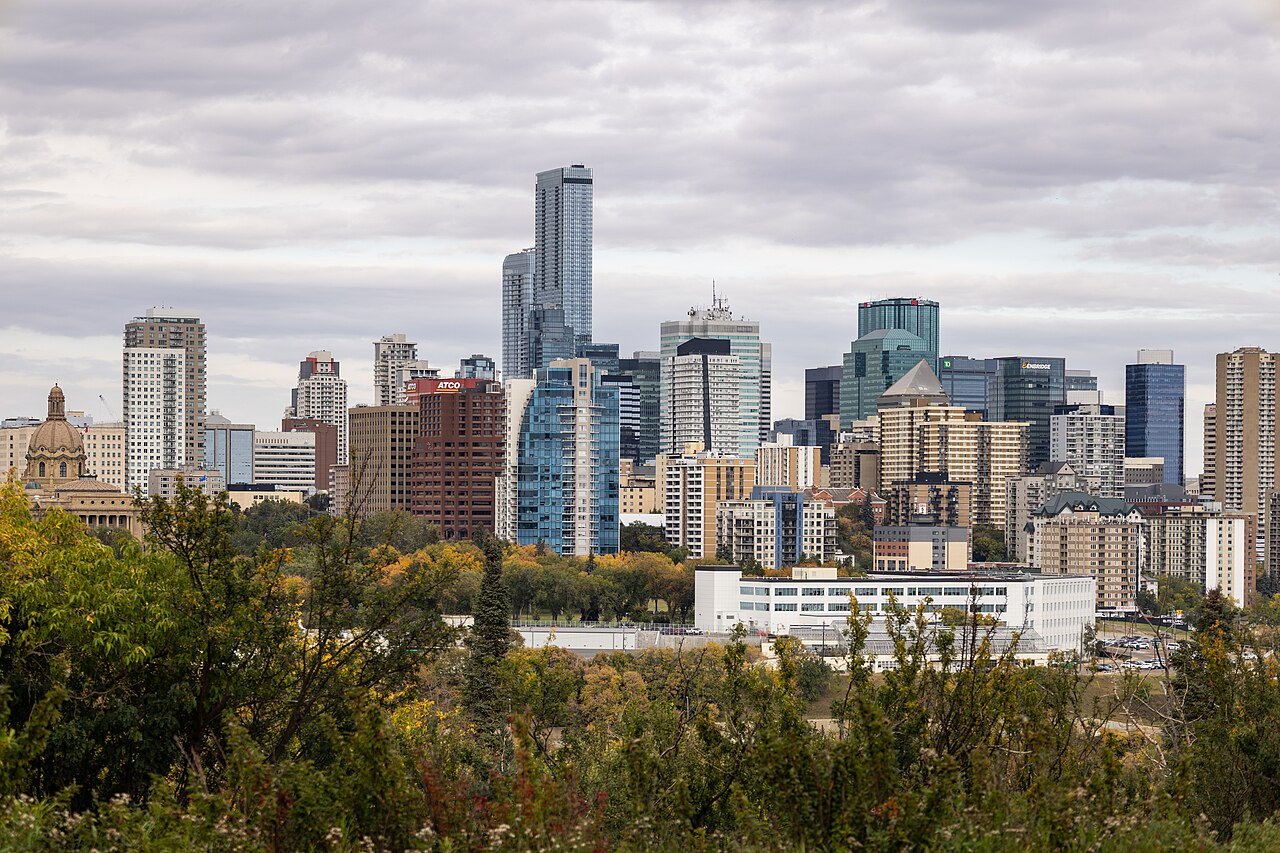
Photo: Crisco 1492, via Wikimedia Commons (CC BY-SA 4.0) — Edmonton skyline from Saskatchewan Drive.
Step 1: How should first-time buyers save the down payment?
Start with the First Home Savings Account (FHSA). You can open one and build up to $8,000 a year in contribution room, to a $40,000 lifetime maximum. Contributions are tax-deductible, and a withdrawal for a qualifying first home is tax-free.
Next, the RRSP Home Buyers’ Plan lets you withdraw up to $60,000 from your RRSP toward a first home, repaid over 15 years. Many Edmonton buyers use both – the FHSA for new saving, and the Home Buyers’ Plan for money already sitting in an RRSP.
Know the minimum down payment tiers before you set your target: 5% on the portion of the price up to $500,000, and 10% on the portion from $500,000 to $1.5 million for an insured purchase. Insured purchases are capped at a $1.5 million purchase price, and putting 20% down avoids mortgage default insurance altogether.
Step 2: What happens at pre-approval?
At pre-approval, a lender or broker reviews your income, debts, credit and documents, and confirms the mortgage amount you qualify for. That qualification uses the stress test: you must qualify at your contract rate plus 2%, or 5.25%, whichever is higher.
A pre-approval typically comes with a rate hold of 90 to 120 days, which protects your rate while you shop. It is not a final approval – the property itself still has to be approved later – but it tells sellers you are serious and tells you exactly where your ceiling is.
You can start that review with my Pre-Approval & Refinance Check, and first-time buyers can see the whole sequence in plain language in the First Home Guide for Edmonton.
“She took the time to understand my unique financial situation and offered tailored solutions… I’m now a proud homeowner.” – Ivan, Google review
Step 3: What happens after your offer is accepted?
With an accepted offer, your file moves to final approval. The lender verifies the property, may order an appraisal, and confirms your documents are current. Insured first-time buyers, and buyers of new builds, may qualify for a 30-year amortization under rules in place since December 2024 – worth asking about, because it changes the payment math.
Once approved, your lawyer takes over: reviewing title, preparing documents, and receiving the mortgage funds. On possession day, the funds flow, the sale registers, and you get your keys.
How much do you need beyond the down payment?
Budget for funds to close on top of the down payment. Those costs fall into predictable categories – legal fees, the appraisal where one is required, and the other closing items your lawyer will itemize for you. Ask for that full picture at pre-approval stage, not on the final week, so your down payment target reflects what you will actually need in the bank.
Saving for your first Edmonton home, or ready to check your number? Call me at (780) 722-5621 – I will try to call you this week, and if you reply with a good time, we can map your saving, pre-approval and shopping steps in one conversation.
By Travis Bannert, Realtor and Mortgage Broker
Travis Bannert, Mortgage Broker | Next Door Mortgages, Dominion Lending Centres | (780) 722-5621 | nextdoormortgages.com