Two days after the Bank of Canada raised its policy rate to 2.50%, Statistics Canada reported that Canada’s economy did not grow at all in August — the second flat month in a row — and likely shrank slightly in September. Preliminary third-quarter growth is tracking at 1.3% annualized, well below the roughly 2% the Bank projected in the Monetary Policy Report it published alongside the hike. For Edmonton borrowers, that gap is now the whole December 9 story: the Bank hiked to fight inflation, but it did so into an economy that is barely growing.
Canada GDP — Statistics Canada, released Oct. 30, 2026
| Real GDP, August 2026 | Essentially unchanged (expected +0.2%) |
| Sectors that expanded | 9 of 20 |
| Retail trade / manufacturing / construction | +1.2% / +0.3% / +0.2% |
| Wholesale trade / public sector / utilities | −1.4% / −0.2% / −0.4% |
| September advance estimate | −0.1% |
| Preliminary Q3 growth (annualized) | 1.3% — vs the Bank of Canada’s ~2% projection; Q2 was 3.3% |
| Official September / Q3 figures | November 30, 2026 |
Source: Statistics Canada, Gross Domestic Product by Industry, August 2026, released October 30, 2026.
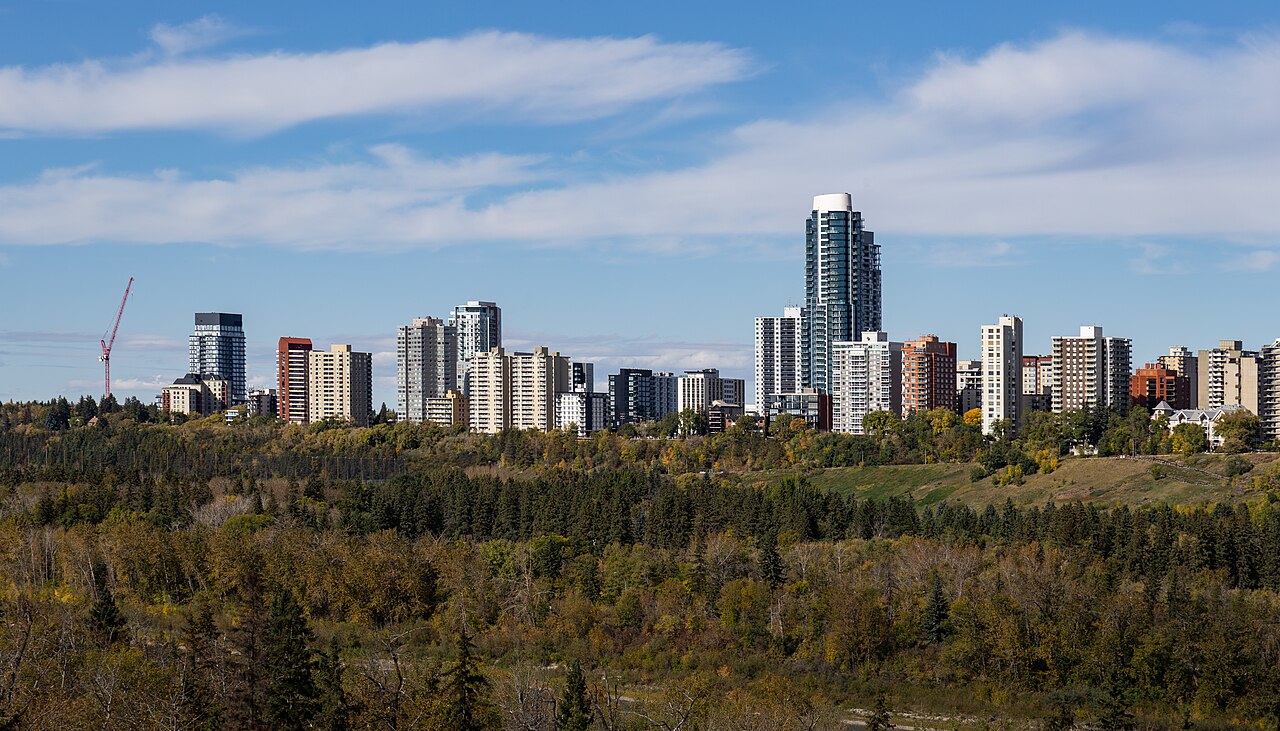
Photo via Wikimedia Commons
Why this release matters more than most
GDP reports usually change nothing for a household. This one lands in the middle of a live rate decision. The Bank of Canada raised rates on October 28 because inflation is running near 3% and it expects it to stay there through most of 2027. But its own forecast assumed the economy would grow about 2% in the third quarter. The first hard data since the decision says 1.3% — and the details are not an Alberta collapse story: construction still grew, manufacturing grew for the fifth time in seven months, and Alberta’s drag was scheduled oil sands maintenance in the north, not a housing or jobs downturn. The weakness was concentrated in wholesale trade, a winding-down census in the public sector, and utilities.
That mix matters because it gives the Bank a reason to pause in December without admitting the October hike was wrong — and it gives borrowers a genuine two-way risk to plan around instead of a one-way escalator.
What it changes for your mortgage before December 9
If you hold a variable-rate mortgage: your rate follows the Bank’s policy rate, and prime is 4.70% today. A soft economy makes a second consecutive hike on December 9 harder to justify — but inflation near 3% makes a cut unlikely too. Plan for prime to stay where it is, know your trigger rate if your payment is fixed, and treat any December surprise as a bonus or a manageable cost — not as your plan.
If you are choosing fixed vs variable right now: fixed rates are priced off bond yields, not the policy rate, and bond markets read releases like this one within hours. Weak growth data can soften fixed pricing slightly even while the Bank holds — which is why the rate you are quoted this week may differ from last week’s in either direction. This is a week to have a live quote on your actual file, not to shop from a posted-rate table.
If you renew in the next six months: do not wait for December 9 to start. Rate holds typically protect a rate for 90–120 days while you decide, and starting the renewal conversation now costs nothing. If December brings a hold, you renew calmly; if it brings another hike, you already hold pricing.
If you are buying this fall: get or refresh your pre-approval at today’s numbers. A pre-approval at prime 4.70% with the stress test applied is a real budget; a budget built on September’s rates is not.
Posted rates are a starting point, not the final word. Rates are sometimes negotiable depending on the person and the situation, and we work with multiple lenders who offer different products and sometimes more competitive rates than any single posted table shows. Contact us and we will shop across lenders for your file — call Travis Bannert at 780-720-8240. Any rate quoted for your file is based on an application and lender approval — it is confirmed only when a lender reviews your full application.
Run your numbers through the Pre-Approval & Refinance Check: https://nextdoormortgages.com/pre-approval-refinance-check/ — that page is the fastest way to sign up for a review of what you qualify for, what documents you need, and what your payment would look like at today’s rates.
Frequently asked questions
What did Statistics Canada report about Canada’s GDP? Real GDP was essentially unchanged in August 2026 — the second consecutive flat month — missing expectations of a 0.2% gain. The advance estimate for September is a 0.1% decline, putting preliminary third-quarter growth at 1.3% annualized, below the Bank of Canada’s roughly 2% projection. Official figures arrive November 30.
Does weak GDP mean the Bank of Canada will cut rates in December? Not necessarily. The Bank raised its policy rate to 2.50% on October 28 because inflation is near 3%. Weak growth makes another hike harder to justify, but a cut would require inflation to cooperate. The realistic planning case for December 9 is a hold — with risk on both sides.
When is the next Bank of Canada rate decision? December 9, 2026. Statistics Canada’s official September and third-quarter GDP figures land November 30, nine days before the decision, and will be one of the last major data points the Bank sees.
Should I lock in a fixed rate before December 9? It depends on your file, not the headline. Fixed rates move with bond yields and can ease on weak growth data even if the Bank holds. The right move is a live quote and a rate hold on your actual application — call 780-720-8240 and we will run both the fixed and variable scenarios on your numbers.
Want me to walk you through it? Call Travis Bannert at 780-720-8240 — I will try to call you this week; reply with a good time and we will set a phone appointment to review your rate hold, your renewal, or your pre-approval before December 9.
By Travis Bannert, Realtor and Mortgage Broker
Travis Bannert, Mortgage Broker | Next Door Mortgages, BFL Dominion Lending Centres | 780-720-8240 | nextdoormortgages.com
Photos via Wikimedia Commons.