Poly-B plumbing in an Edmonton home is not automatically a dead end for a mortgage — but it is a financing factor, because insurers treat the grey plastic pipe as higher risk, and some will not insure a home with Poly-B at all, or will only do so with conditions. Lenders require property insurance to be in place at funding, so an insurance problem becomes a mortgage problem if it surfaces at the last minute. Check insurability before you write the offer, not after.
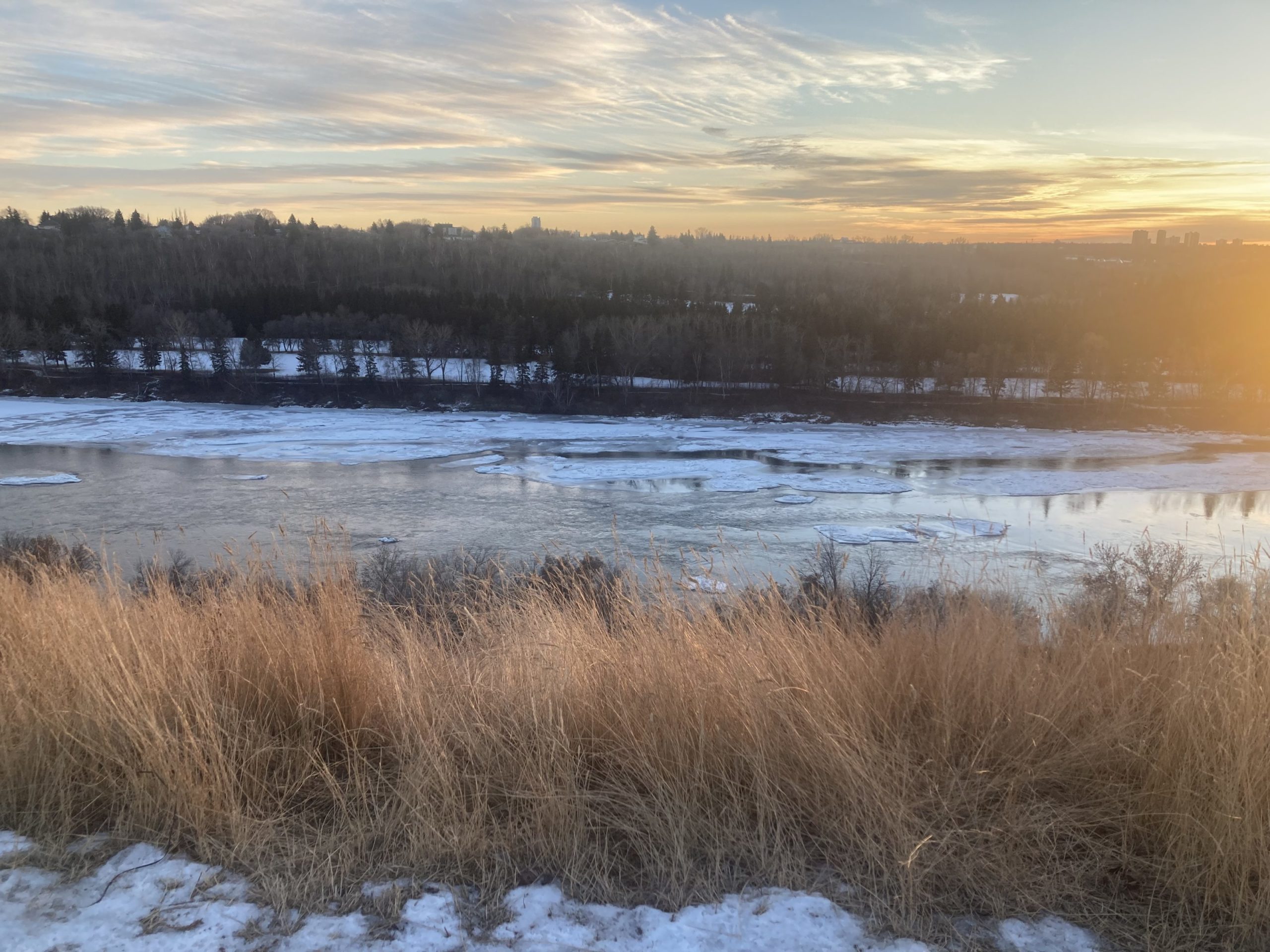
Photo: WinterE229, via Wikimedia Commons (CC0) — Edmonton skyline in winter.
What is Poly-B, and which Edmonton homes have it?
Poly-B — polybutylene — is a grey flexible plastic pipe installed in many Canadian homes built roughly from the late 1970s through the mid-1990s. Plenty of Edmonton homes of that era have it, often visible at the water heater and under sinks, sometimes stamped with markings such as PB2110.
The concern is failure over time: leaks and bursts tied to the pipe and its fittings degrading, which is why insurers pay attention to it even when a particular home has never had a problem. A home inspector can confirm whether a home has Poly-B and note its visible condition, but an inspector’s clean bill does not bind an insurer.
How do insurers and lenders treat Poly-B?
Every insurer sets its own rules. Some insure Poly-B homes with conditions — a higher deductible for water damage is one example — some charge more, and some decline outright. Those are examples of how insurers respond, not a promise about your file: the only answer that counts is a quote on the specific property, before your conditions deadline.
On the lending side, the lender does not usually judge the pipe itself. The lender requires valid property insurance effective for funding, so if insurance cannot be placed, the mortgage cannot close. Treat insurance confirmation as a financing condition, right alongside the appraisal and income checks.
That timing matters if you are also watching deadlines — my Mortgage Renewal Check and Pre-Approval & Refinance Check both build in time to clear conditions like this before they become emergencies.
“From start to finish she made the mortgage process easy.” — My-Phuong Duong, Google review
What should buyers budget or negotiate?
You have three realistic paths: accept the home with Poly-B and insure it on whatever terms are offered, negotiate a price or credit that reflects replacement, or plan to replace the Poly-B after possession and budget that cost as part of your purchase.
Which path fits depends on the insurer’s answer, the home’s price, and how long you plan to stay. Get the insurance quote first — with a real property and real terms — and the rest of the decision usually makes itself.
Sellers of homes with Poly-B should expect the question, too. Being able to tell a buyer the home is insurable, and at what terms, removes one of the most common reasons these sales wobble at condition removal.
When should you get insurance quotes on a Poly-B home?
During the condition period — before you waive conditions, while you can still walk away. The sequence that protects you:
Identify it early. Ask at the showing; confirm at the home inspection.
Quote it immediately. Call insurers or a broker the day the offer is accepted and say the words “Poly-B” out loud. Get the answer — insurable, surcharged, or replacement-required — in writing.
Budget the outcome. If replacement is required within a set period, plan and budget that work as part of the purchase, rather than discovering the condition after possession.
Tell your mortgage broker early. A broker who knows in week one can sequence the file so insurance is bound well before the funding deadline.
What other aging systems raise the same questions?
The same lens applies to other aging systems insurers and lenders ask about in older Edmonton homes: knob-and-tube wiring, aluminum wiring, and 60-amp electrical panels. None of these automatically ends a purchase — but each one belongs in the same early conversation, because each one can affect whether insurance binds on schedule. The pattern is identical: identify it at inspection, quote it during conditions, and never let it surface for the first time in the closing week.
Looking at an older Edmonton home and unsure how Poly-B affects your mortgage? Call me at (780) 722-5621 — I will try to call you this week, and if you reply with a good time, we can sequence the insurance check and the mortgage steps before your deadline.
By Travis Bannert, Realtor and Mortgage Broker
Travis Bannert, Mortgage Broker | Next Door Mortgages, Dominion Lending Centres | (780) 722-5621 | nextdoormortgages.com